Why Understanding Pet Nutrition Matters
Most owners believe pet nutrition care happens at the park or the vet’s clinic. At My Pets Picks, we’ve uncovered a sharper reality: your pet’s health is decided every single morning at the kitchen bowl.
“Understanding Pet Nutrition” isn’t just a headline—it’s the silent engine behind every tail wag. I’ve sat with heartbroken parents whose dogs faced chronic pain or whose cats hit kidney failure far too early. In almost every case, the culprit wasn’t a lack of love; it was a lack of nutritional intention. Filling a bowl to stop begging is easy. Fueling a biological miracle is a different story.
Every meal is either building an immune fortress or slowly eroding metabolic health. As the AVMA confirms, pet nutrition is our most potent preventative tool. But here’s the truth marketing giants hide: your pet is a captive audience. They cannot choose balance; they rely entirely on your expertise. We aren’t just talking about “food”—we’re talking about preventing obesity before it suffocates the heart and shielding kidneys before they lose 70% of their function. It’s time to trade guesswork
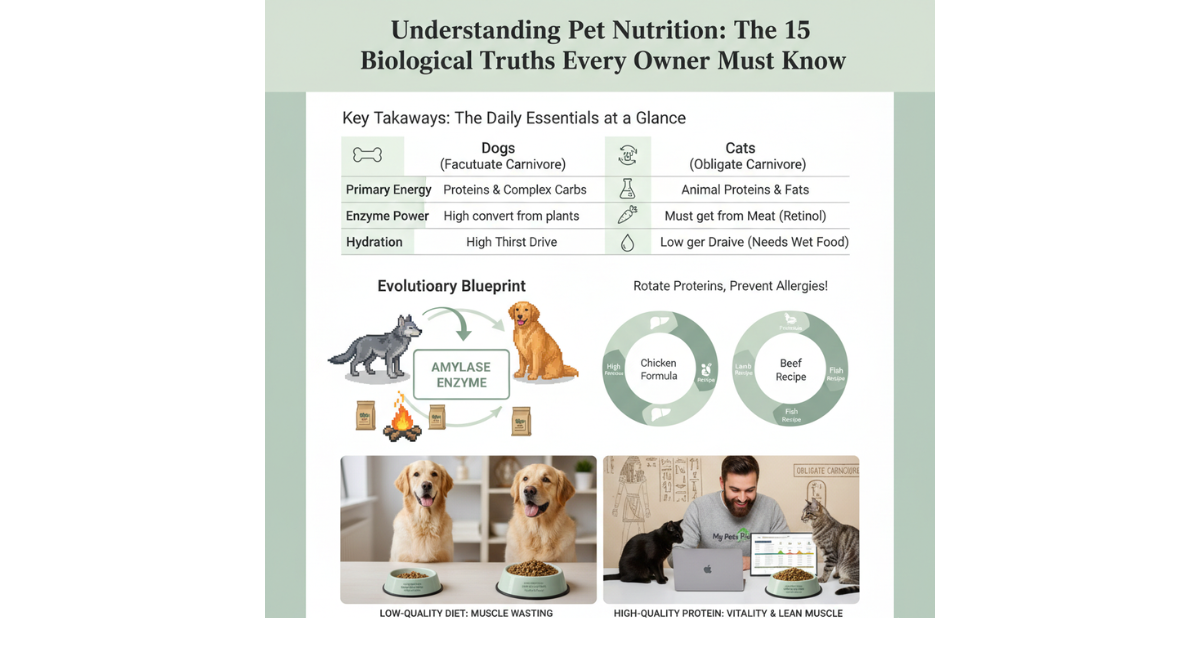
Key Takeaways: The Daily Essentials at a Glance
| Feature | Dogs (Facultative Carnivore) | Cats (Obligate Carnivore) |
| Primary Energy | Proteins & Complex Carbs | Animal Proteins & Fats |
| Enzyme Power | High Amylase (Starch Digestion) | Low Amylase (Protein Focused) |
| Vitamin A | Can convert from plants | Must get from Meat (Retinol) |
| Hydration | High Thirst Drive | Low Thirst Drive (Needs Wet Food) |
The 15 Biological Truths Every Owner Must Know
1. Biological Bioavailability is the Golden Rule If a bag boasts “30% Protein,” but it’s sourced from low-quality soy or feathers, your pet’s body can’t absorb it. We look for Animal-Source Protein for 90%+ absorption.
2. The Taurine Mandate for Cats cannot synthesize Taurine. Without it from meat, their heart walls thin (DCM). This is why vegan diets for cats are a death sentence.
3. Arachidonic Acid: The Feline Essential Unlike dogs, cats lack the metabolic pathway to produce this fatty acid from plant oils. It must come from animal fat.
4. The Glycemic Index Trap White rice and corn cause massive insulin spikes in dogs. We advocate for low-glycemic carbs like sweet potatoes.
5. Moisture is a Macronutrient Cats have a low thirst drive. Dry kibble (10% water) vs. Wet food (75% water) can decide the fate of their kidneys.
6. The Omega-3/Omega-6 Seesaw Most foods are pro-inflammatory (too much Omega-6). Supplementing with Salmon oil or Krill oil is the “secret sauce” for skin health.
7. The Microbiome—The Second Brain 70% of the immune system is in the gut. Prebiotics are essential to prevent “Leaky Gut” syndrome in dogs.
8. Vitamin A Conversion Limits Dogs can convert beta-carotene (carrots) to Vitamin A; cats cannot. Cats need pre-formed Vitamin A (Retinol) from liver.
9. The Ash Content Mystery High “ash” in food indicates too many crushed bones, which can stress a senior pet’s kidneys.
10. Phosphorus-Calcium Balancing For large-breed puppies, an imbalanced ratio can cause permanent bone deformities.
11. Enzymes vs. Heat Kibble is cooked at high heat, killing natural enzymes. Adding fresh toppers can revitalize their digestion.
12. The L-Carnitine Role This amino acid helps overweight dogs burn fat while maintaining muscle mass.
13. Rotational Feeding Benefits Feeding only one protein for years causes “sensitization” (allergies). Change your protein source every 3 months.
14. Avoid “Boutique” Marketing Don’t choose food based on pretty packaging. Look for the AAFCO Feeding Trial statement.
15. The Senior Shift As pets age, their protein needs actually increase to prevent muscle wasting, while their calorie needs decrease.
The Science Behind What Dogs and Cats Really Need Daily
To truly master pet nutrition care, we have to respect a hard biological reality: dogs and cats run on entirely different internal operating systems. At My Pets Picks, we often see owners make the dangerous gamble of treating their cats like miniature dogs. From a metabolic standpoint, that’s like trying to run a diesel engine on regular gasoline—it might spark for a while, but the long-term damage is inevitable.
Dogs: The Master Adapters
Dogs aren’t just wolves in living rooms; they are history’s greatest survivors. Centuries of scavenging near human settlements forced a remarkable DNA mutation. Modern dogs produce amylase, a specialized enzyme that allows them to unlock energy from starches. This evolutionary “pivot” means they can thrive on a diverse, omnivore-leaning diet. While they still crave high-quality animal protein, their bodies have the unique flexibility to utilize complex carbohydrates to fuel their daily adventures.
Cats: The Biological Specialists
Cats, however, refused to change. They remained frozen in time as obligate carnivores. Their metabolism isn’t flexible; it’s a high-precision machine locked into a meat-based fuel source. A cat’s liver is a relentless engine that converts protein into energy 24/7. If their bowl lacks real animal tissue, their body doesn’t just “slow down”—it begins a self-destructive process, literally breaking down its own muscle mass to stay alive. They don’t just want meat; they are biologically sentenced to it.
Beyond the Species: The Bio-Individual Fuel Strategy
Instead of looking at dogs and cats as just “pets,” we need to look at them as individual athletes. At My Pets Picks, we’ve realized that a 10-year-old sedentary Labrador and a 2-year-old active Border Collie cannot thrive on the same “All Life Stages” bag, even if they share the same DNA.
Metabolic Ageing and Nutrient Density
As pets age, their digestive efficiency drops. While a puppy needs massive amounts of calcium for bone density, a senior dog requires higher quality protein (not less!) to prevent sarcopenia—the natural wasting of muscle mass. If you feed a senior pet low-quality “Senior” food that is mostly fiber and fillers, you are essentially starving their muscles to save their kidneys. It’s a delicate balance that marketing labels often ignore.
The Activity Coefficient
Most owners over-estimate their pet’s activity level. If your dog sleeps 18 hours a day, their requirement for high-glycemic carbohydrates is almost zero. Feeding an “Active” formula to a “Couch Potato” pet is the fastest way to trigger Metabolic Syndrome—a precursor to diabetes and heart disease.
We advocate for Precision Feeding: adjusting the bowl based on the week’s activity, not just the bag’s instructions. This level of intentionality is what separates a “surviving” pet from a “thriving” one.
The Protein Powerhouse: It’s About Amino Acids, Not Just Percentages
When you flip over a pet food bag, the first thing your eyes hit is that “Protein” percentage. But there is a massive deception hidden in that number.
Biological Bioavailability: Can They Actually Use It?
If a bag boasts “30% Protein,” that sounds impressive. However, if that protein is sourced from low-quality soy, feathers, or corn gluten, your pet’s body can’t actually absorb it. We call this Biological Bioavailability. Dogs and cats need highly digestible proteins—chicken, beef, fish, or eggs—that can be broken down into the amino acids their cells are literally starving for. If the protein is “hollow,” your pet will always feel hungry, leading to begging and weight gain, because their body is technically malnourished despite a full stomach.
The Non-Negotiable: Taurine for Cats
For a cat, protein isn’t just for muscle; it’s a life-or-death requirement for their heart and eyes. Unlike dogs, cats cannot synthesize enough Taurine on their own. They must eat it in the form of animal meat. This is why a “vegetarian cat” is a biological impossibility. Without daily taurine, feline heart walls can thin and fail. It’s that simple, and that serious.
Fats: The Energy Currency and the Brain-Body Connection
If protein is the building material, fat is the fuel. It is the most concentrated energy source for both species, but its role goes far beyond just “calories.”
The Omega-3 vs. Omega-6 Seesaw
Most commercial pet foods are dangerously heavy on Omega-6 fatty acids (usually from poultry fat and grains). While necessary, an excess of Omega-6 triggers inflammation. To counter this, your pet needs Omega-3s from sources like salmon oil or krill. This balance is the “secret sauce” that stops chronic itching and gives your dog that unmistakable “show-dog” shine.
Expert Tip: The “Smell” Test
Open your pet’s food container and take a deep breath. If it smells like old paint or “off” oil, the fats have likely oxidized. Rancid fats don’t just taste bad; they create free radicals that damage your pet’s cells from the inside out. Always keep kibble in its original bag, sealed in an airtight bin.
Carbohydrates: The Misunderstood Middle Ground
The “grain-free” debate has polarized the pet world, but the truth is found in the middle. Dogs utilize complex carbohydrates like sweet potatoes, oats, and brown rice for steady energy and much-needed fiber. Fiber is the unsung hero of the digestive tract; it feeds the “good” bacteria in the gut, ensuring the microbiome stays resilient.
Cats, however, have no biological requirement for carbohydrates. Their liver is permanently set to a “protein-to-energy” mode. While a tiny bit of pumpkin or fiber can help with hairballs, a high-carb diet is the leading cause of the feline obesity and diabetes epidemic in the US. If your cat’s food is 40% corn or wheat, their blood sugar is on a permanent roller coaster.
The Hidden Pillar: Hydration and Kidney Integrity
Water is the most critical nutrient, yet it’s the one we overlook most. Cats are the biggest victims here. Evolutionarily, they are designed to get their moisture from their prey (which is about 75% water). They have a naturally low thirst drive.
When we feed cats dry kibble (which is only 10% water), they live in a state of chronic, mild dehydration. This puts immense, silent stress on their kidneys. This is why adding wet food to a cat’s daily routine isn’t just a “treat”—it is a medical necessity to prevent urinary crystals and kidney failure. For dogs, consistent hydration is the key to joint lubrication and flushing toxins out of the system.
The Gut Microbiome: The Second Brain
Your pet’s health is dictated by the trillions of bacteria living in their gut, known as the Microbiome. These microbes control everything from the strength of the immune system to the pet’s actual mood. We’ve seen “aggressive” or “anxious” dogs show remarkable behavioral improvement once their gut health was corrected. A healthy gut means a happy pet.
Myth-Busting: Setting the Record Straight
Myth: “By-products are garbage.” Actually, high-quality by-products (like liver, heart, and kidney) are the most nutrient-dense parts of an animal. They provide vitamins that muscle meat lacks.
Myth: “Grain-free is always safer.” Not necessarily. Many grain-free brands replace rice with massive amounts of peas or lentils, which have been linked by the FDA to heart issues (DCM) in certain dogs. Balance is better than trends.
How to Choose: The My Pets Picks Strategy
Look for Named Proteins: “Chicken” is a promise; “Meat Meal” is a mystery.
The AAFCO Statement: Look for the words “Complete and Balanced.” It’s the bare minimum for safety.
Life Stage Precision: A 10-year-old Lab needs a completely different caloric profile than a 6-month-old puppy.
Avoid the “Toxic Five”: Never let human snacks with onions, garlic, grapes, chocolate, or Xylitol near the bowl.
FAQs: Questions Every Pet Parent Asks
1: How many times a day should I feed my dog?
Most adult dogs do best with two meals. This prevents “hunger pukes” caused by bile reflux when the stomach stays empty for too long.
2: Can I feed my cat only dry food?
You can, but it’s not optimal. At the very least, add some water or bone broth (salt-free) to the kibble to protect their kidneys.
3: Is expensive food always better?
Not always. You are looking for ingredients, not a price tag. Some mid-range foods have better protein sources than “boutique” brands that spend all their money on fancy packaging.
4: Why is understanding Pet Nutrition important for my dog or cat?
Understanding Pet Nutrition is the most potent preventative tool you have. Every meal is an opportunity to build your pet’s immune system or protect their metabolic health, making Pet Nutrition the silent engine behind a long and healthy life.
Closing Thoughts: Love Is in the Details
Understanding pet nutrition doesn’t require a PhD in biochemistry, but it does require you to look past the colorful marketing. Your dog and cat give you their entire lives—every wag of a tail and every purr is a gift. The least we can do is nourish that life with intention.
Next time you scoop that food, remember: you aren’t just filling a belly. You are fueling a life. You are deciding how much energy they’ll have for that afternoon walk or how many years they’ll spend curled up at the foot of your bed.
Basic Pet Health Care Every Owner Should Know
At My Pets Picks, we believe that better food means a better life. Do you have a specific brand you want us to investigate? Let us know!