
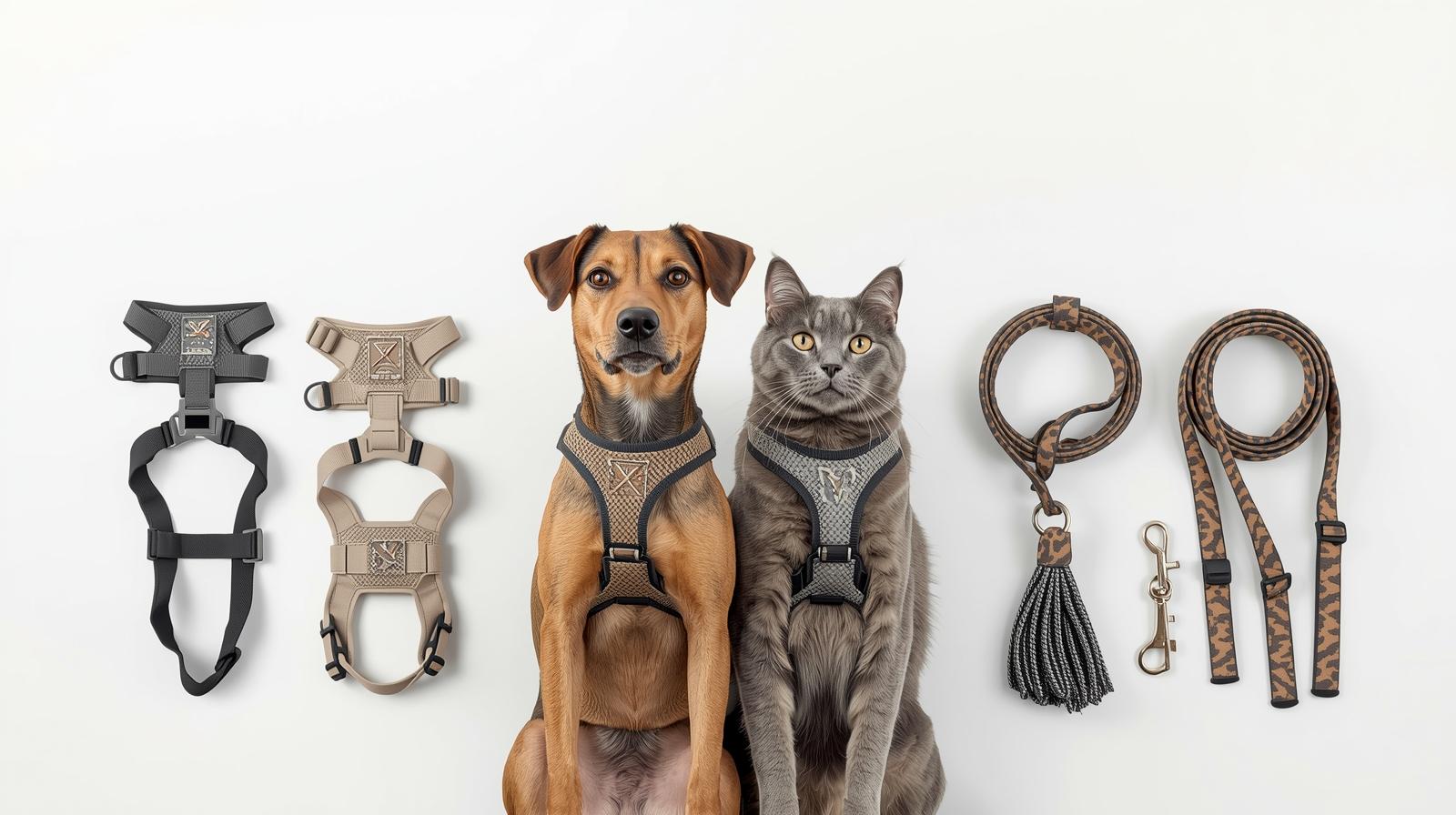
The Silent Equipment Choices That Shape Your Pet’s Health, Safety, and Trust
Selecting the right pet accessories is a biological negotiation between your strength and your dog’s safety, beginning the moment you clip that first lead. One snap of a plastic buckle. A sudden lunge toward traffic. A quiet whimper that most owners completely miss in the chaos of a walk.
Those split-second moments define the boundary between safety and disaster. In our hands-on testing at My Pets Picks, we’ve observed a recurring mistake: owners often treat their walking gear as mere fashion statements. They grab pet accessories based on a trendy color or a low-price tag, treating them as simple afterthoughts. The sobering truth is that these tools sit at the high-stakes intersection of canine anatomy, behavioral psychology, and foundational trust.
When you choose incorrectly, you unknowingly introduce chronic stress, tracheal compression, and behavioral fallout that may not surface for months. However, selecting the right interface between your pet’s body and the human world changes everything. Your pet begins to move with newfound confidence, listens with sharper focus, and finally breathes without restriction.
Selecting quality pet accessories isn’t just about restraint; it is a biological negotiation between your physical strength and your dog’s skeletal integrity. At My Pets Picks, we’ve spent two decades deconstructing the terrifying instances where reliable gear fails under pressure. Most owners unknowingly buy a false sense of security rooted in aesthetics rather than biomechanics. To transition from a reactive owner to a proactive guardian, you must abandon the one-size-fits-all mentality.
This guide serves as your tactical blueprint for mastering the mechanics of walking gear. Whether you are navigating a crowded city sidewalk or a quiet forest trail, understanding how to choose the right collar, harness, or leash for your pet is the first step in forging a bond that survives the unpredictability of the real world.
Understanding Your Pet’s Unique Needs
Before you invest in new gear, pause and evaluate the animal at the other end of the lead. Every pet operates on a different biological frequency; what secures a muscular guardian breed might physically overwhelm a fragile toy companion. At My Pets Picks, we believe that selecting the right pet accessories begins with a deep anatomical audit rather than a random shopping cart addition.
Breed Dynamics and Mechanical Load
Size represents only one piece of the puzzle; skeletal structure and respiratory health dictate your final choice. Large, high-drive breeds require reinforced, heavy-duty materials capable of absorbing sudden kinetic energy without snapping. Conversely, smaller breeds possess delicate cervical vertebrae. These pets need lightweight designs that distribute pressure safely away from the neck and spine to prevent long-term trauma.
Consider these tactical requirements:
- Toy Breeds: Soft, padded harnesses shield their fragile tracheas from accidental collapse during a sudden lunge.
- Working Breeds: Durable, ballistic-grade collars provide the necessary leverage for managing high-power movements.
- Brachycephalic Breeds (e.g., Pugs and Bulldogs): These pets face unique respiratory challenges, making a harness a non-negotiable tool to ensure unobstructed airflow and prevent overheating.
Identifying these specific needs ensures you don’t just buy generic pet accessories, but rather a customized safety system tailored to your pet’s physical reality. When you align equipment with anatomy, you eliminate the risk of chronic injury and maximize comfort during every outing.
The Life-Cycle Audit: Age, Health, and Temperament
Before you finalize your gear, analyze the biological and behavioral stage of your companion. At My Pets Picks, we’ve observed that a pet’s needs shift drastically as they move from the erratic energy of youth to the delicate requirements of their senior years. Relying on the wrong pet accessories during these transitions can lead to avoidable physical setbacks and long-term joint damage.
The Impact of Age and Vitality
Age dictates the physical load a pet’s body can safely handle. Puppies possess incredible skeletal plasticity but lack impulse control; they often lunge suddenly, which can damage developing neck muscles. Conversely, senior pets frequently navigate the challenges of arthritis or chronic joint inflammation. For these aging companions, a high-quality harness serves as a vital tool to redistribute weight and eliminate cervical strain. If your pet manages any form of respiratory compromise, strictly avoid equipment that exerts direct pressure on the trachea to ensure consistent oxygen flow.
Behavioral Profiling: Mapping the Personality
A pet’s temperament acts as the operating system behind the leash. Understanding this internal map remains the most critical step when deciding how to choose the right collar, harness, or leash for your pet.
- The High-Drive Puller: These dogs benefit immensely from front-clip harnesses. These tools leverage physics to redirect momentum toward you without causing physical pain.
- The Sensitive or Nervous Soul: Pets prone to anxiety find security in padded, wrap-style harnesses. These provide a calming, swaddle-like sensation that lowers stress levels during walks.
- The Disciplined Companion: Well-trained animals with reliable focus often perform perfectly with standard flat collars. These pets require minimal mechanical correction and enjoy the lightweight feel.
By matching your pet accessories to both the health status and the unique personality of your pet, you create a safer, more intuitive walking experience. This alignment ensures that every outing strengthens your bond rather than creating a frustrating battle of wills.
Types of collars
Collars represent the most traditional interface in pet accessories, yet their simplicity often masks a complex range of technical functions. At My Pets Picks, we believe a collar must serve two vital purposes: permanent identification and precise communication. However, choosing the wrong architecture can transform a routine walk into a mechanical failure.
1. The Standard Flat Collar: The Everyday Foundation
This is the baseline for most pet accessories kits. It provides a secure anchor for ID tags and works perfectly for pets that have already mastered loose-lead walking.
- The Blueprint: Prioritize high-tensile bio thane or reinforced nylon equipped with heavy-duty, stainless-steel buckles.
- Tactical Deployment: Best for calm walkers, permanent ID display, and low-distraction environments.
2. The Martingale Collar: The Escape-Artist’s Foil
Engineered specifically for sighthounds (like Greyhounds) whose narrow heads easily slip out of standard gear, the Martingale uses a limited-slip design. It tightens just enough to prevent the dog from backing out without the risk of tracheal choking.
- The Blueprint: Select a model where the tension loop matches the durability of the main collar body to ensure uniform strength.
- Tactical Deployment: Essential for sighthounds, nervous escape artists, and dogs requiring gentle training reinforcement.
3. The Head Collar: Mastering Anatomical Leverage
Operating on the same biological principle as a horse halter, head collars guide the dog’s nose. Because a dog’s body instinctively follows its head, this tool grants you immense leverage over powerful breeds without requiring brute physical strength.
- The Blueprint: Always choose designs with padded nose bridges to prevent skin abrasion and ensure comfort.
- Tactical Deployment: Ideal for extreme pullers, high-drive large breeds, and focused behavior modification sessions.
4. Professional Training Collars: An Ethical Note
Tools such as prong or electronic collars sit at the extreme end of the spectrum. At My Pets Picks, we practice radical transparency: these tools require the direct supervision of a certified professional behaviorist. When you evaluate how to choose the right collar, harness, or leash for your pet, prioritize humane, positive-reinforcement equipment that builds a bridge of trust rather than a wall of fear.
The Harness and Advantage: Engineering Safety and Control
Harnesses represent a fundamental shift in how we manage a pet’s momentum. By distributing pressure across the powerful muscles of the chest and shoulders, they eliminate the mechanical strain on the delicate cervical spine. At My Pets Picks, we consider the transition to a harness one of the most significant upgrades you can make to your collection of pet accessories.
1. Front-Clip Harness: The Training Powerhouse
In our hands-on testing, the front-clip harness remains the gold standard for managing high-energy pets. Because the leash attaches at the center of the chest, it manipulates the dog’s center of gravity rather than their neck.
- The Mechanics: When the dog lunges forward, the tension gently pivots their body back toward you.
- Tactical Benefits: It effectively reduces pulling, encourages a natural walking posture, and facilitates faster learning during training sessions.
2. Back-Clip Harness: The Comfort-First Option
These are the most common pet accessories found in local stores. The leash attaches between the shoulder blades, providing a low-stress experience for pets that already walk reliably.
- The Reality: While extremely comfortable and easy to put on, they can inadvertently trigger the Opposition Reflex—the biological urge to pull against pressure. If you have a powerful breed, this gear might actually encourage them to drag you.
- Tactical Benefits: Ideal for small breeds prone to tracheal collapse and calm, senior pets who require zero behavioral correction.
3. Dual-Clip Harness: The Professional’s Hybrid
For those who refuse to compromise, the dual-clip harness offers attachment points on both the chest and the back.
- Versatility: Use the front clip for training in high-distraction environments and the back clip for relaxed, sniff-heavy forest walks.
- Tactical Benefits: This provides the ultimate safety net, allowing you to switch control levels instantly without changing your gear.
Experts often recommend harnesses when teaching you how to choose the right collar, harness, or leash for your pet because they offer sophisticated safety and mechanical leverage that a standard collar simply cannot match.
Expert Insights: Frequently Asked Questions
Navigating the vast market of pet accessories often feels overwhelming. To help you finalize your decision on how to choose the right collar, harness, or leash for your pet, we’ve tackled the most critical questions from our community.
1. Is a harness objectively superior to a collar?
For most dogs—especially those prone to pulling or suffering from respiratory issues—yes. A harness redistributes mechanical force across the sturdy chest muscles, protecting the delicate throat. However, keep a collar for permanent ID display and for dogs that have already mastered impeccable loose-lead walking.
2. How do I guarantee the perfect collar fit?
Apply the Two-Finger Rule. Slide two fingers comfortably between the material and your pet’s neck. If you cannot, the gear is too tight and risks skin chafing; if you can fit more, your pet might slip out during a high-stakes distraction.
3. Do retractable leashes actually offer safety?
At My Pets Picks, we generally advise against them in urban environments. While they provide freedom in wide-open spaces, they slash your reaction time in busy areas. The thin cords also pose a risk of friction burns or sudden mechanical failure under tension.
4. What is the ideal starter kit for a puppy?
Equip your puppy with a lightweight, adjustable Y-harness and a standard 4-to-6-foot fixed lead. Puppies lack impulse control, and this combination provides a reliable safety net while they learn the basics of focus and movement.
5. When should I retire my walking gear?
Conduct a safety audit of your pet accessories every month. Look for frayed webbing, rusted hardware, or weakened stitching. Replace the item immediately if you detect even slight structural compromise. Your pet’s life depends on the integrity of that single buckle.
6. Can the wrong equipment cause long-term trauma?
Absolutely. A poorly fitted collar or a harsh training tool can lead to chronic cervical strain, tracheal collapse, and psychological leash reactivity. Prioritizing anatomical health over aesthetics prevents these debilitating issues before they start.
The Final Verdict: Forging a Bond Through Quality
Mastering your walking kit is more than a logistical necessity; it is a profound act of care. Your choice between a collar or a harness dictates the long-term physical and psychological health of your companion. At My Pets Picks, we urge you to look beyond the superficial appeal of generic pet accessories and prioritize the biological harmony between gear and anatomy.
A walk should never be a struggle for dominance. When you choose tools based on structural integrity and mechanical leverage, you replace frustration with clear communication. Investing in high-grade pet accessories ensures that every outing remains a source of joy rather than a catalyst for injury.
Ultimately, understanding how to choose the right collar, harness, or leash for your pet empowers you to lead with confidence. By matching the right equipment to your pet’s unique temperament, you provide the safety they deserve and the peace of mind you need. Clip on your lead, step outside, and enjoy the journey—secure in your role as a proactive guardian.